Construction Bid Tabulation
This downloadable template is part of our Planning, Budgeting And Bidding Collection.
This interactive Excel file is pre filled with the formulas you need to start filling it out and utilizing it right away.
The Team At SINC
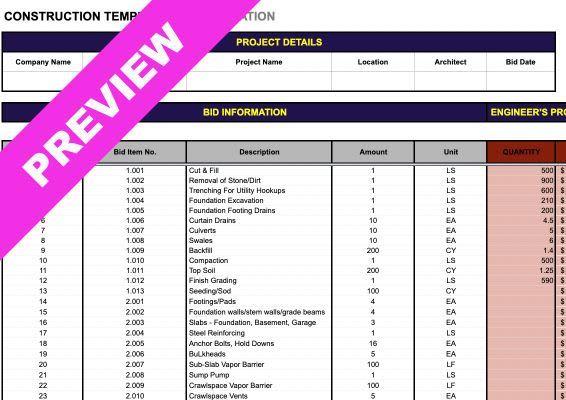
The task of defining and awarding bids can be very confusing, especially on larger construction projects with hundred or even thousands of bid items and high expectations for a quick turnaround.
To avoid costly totalling errors that can negatively impact the awarding process, you need to be able to easily layout each bid item and accurately sum up final bid amounts.
This construction bid tabulation template will help you ensure that each bid is accurately flowing into the final calculation and as an added bonus, it permits the comparison of each bidder's proposal against the initial budget.
What Is Construction Bidding?
When someone, usually a corporation or public entity, needs construction work completed, a process called bidding is often used in which contractors submit proposals to either do the work themselves or manage the project overall. Often, the terms 'bid' and 'estimate' are used interchangeably, but they're not completely synonymous. An estimate is an assessment the contractor makes of their own costs to complete a project, whereas a bid includes overhead and profit - the bid is the final price to be charged for the work.
As stated, a bid is a proposal, and if your bid is accepted, you will only be paid the amount of your bid, so it's critical to ensure your estimation and budget are accurate. The difference between what the project will cost you and the amount of your bid is your profit. New contractors looking to enter a market may intentionally reduce their margins in order to secure the lowest bid, but generally speaking, bids will include the contractor's base cost for labor, equipment, and materials, plus a percentage for profit margin. In many cases, especially in public works, the law often requires going with the lowest bidder.
In construction bidding, tenders follow the same basic process:
- Initially, the client will release an RFP (Request For Proposals) aka an RFT (Request For Tender) which lays out all the drawings along with the project scope and specifications.
- Next, contractors will study the RFP, assess all the project elements, perform an estimate of the project costs, and put together a bid that includes their costs and profit margin.
- The client then reviews all of the bids and awards one of the contractors the project.
- The client and the winner get together to establish the ground rules, and the contract is signed.
- Construction begins.
This sample resource is provided to you free by SINC BUSINESS CORPORATION to help with your compliance efforts and includes no warranty as to its suitability for any particular task. It is only our opinion based on our experience and should not be considered legal advice.